
Last updated November 25, 2026
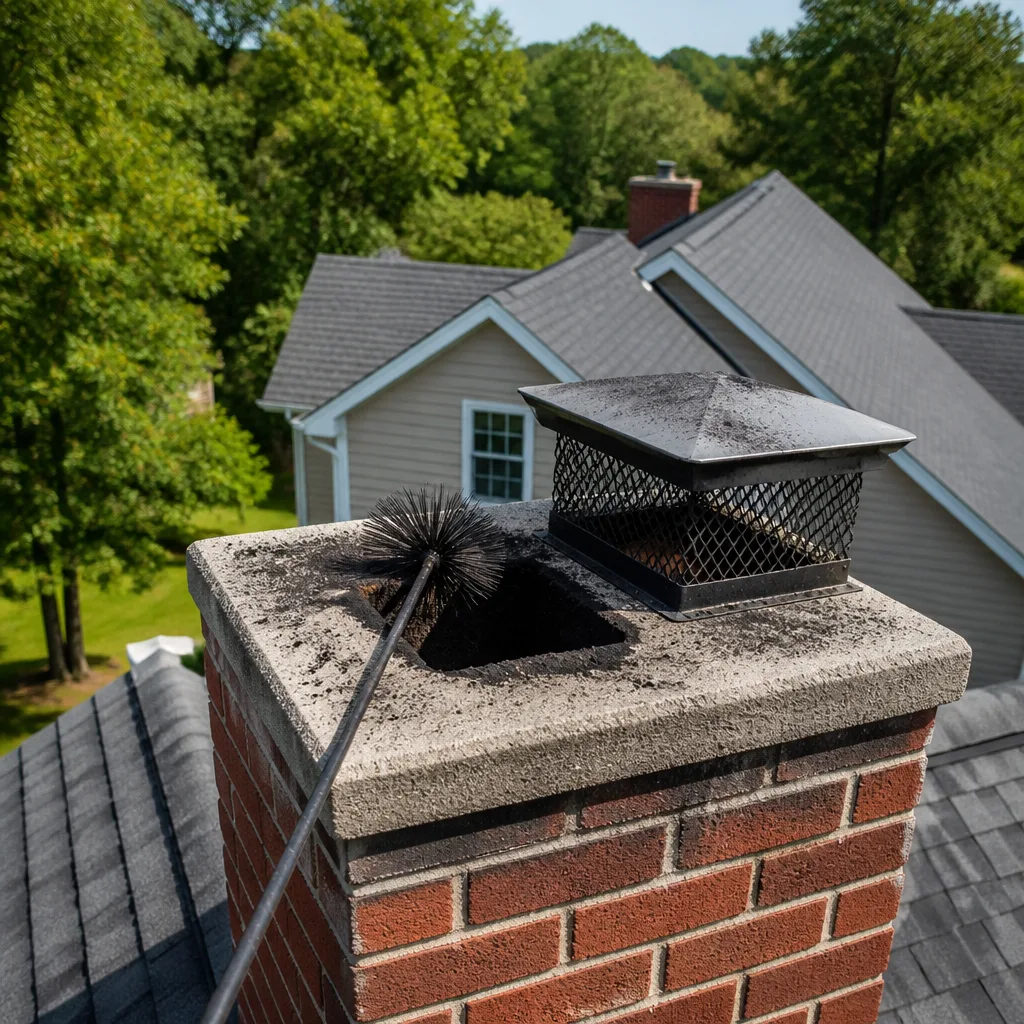 Sweep & inspection
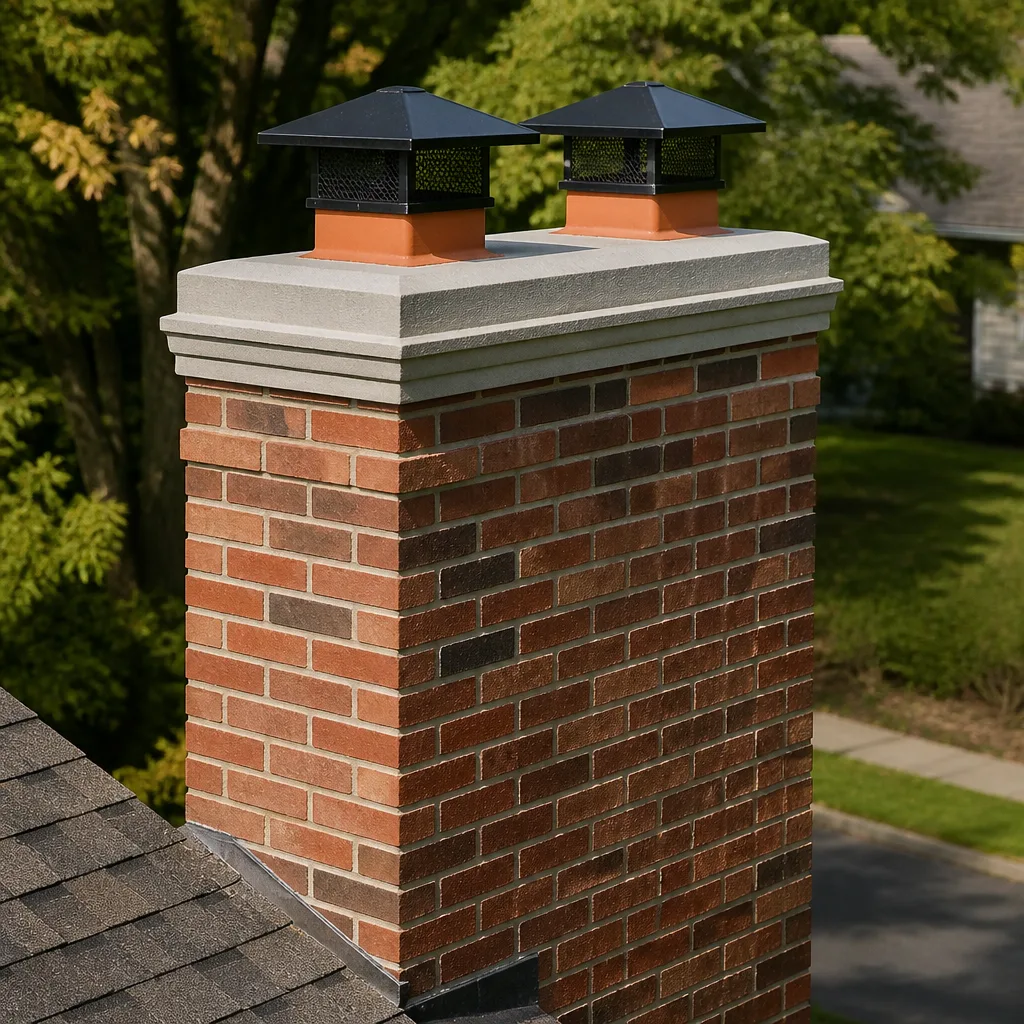 Caps & crowns
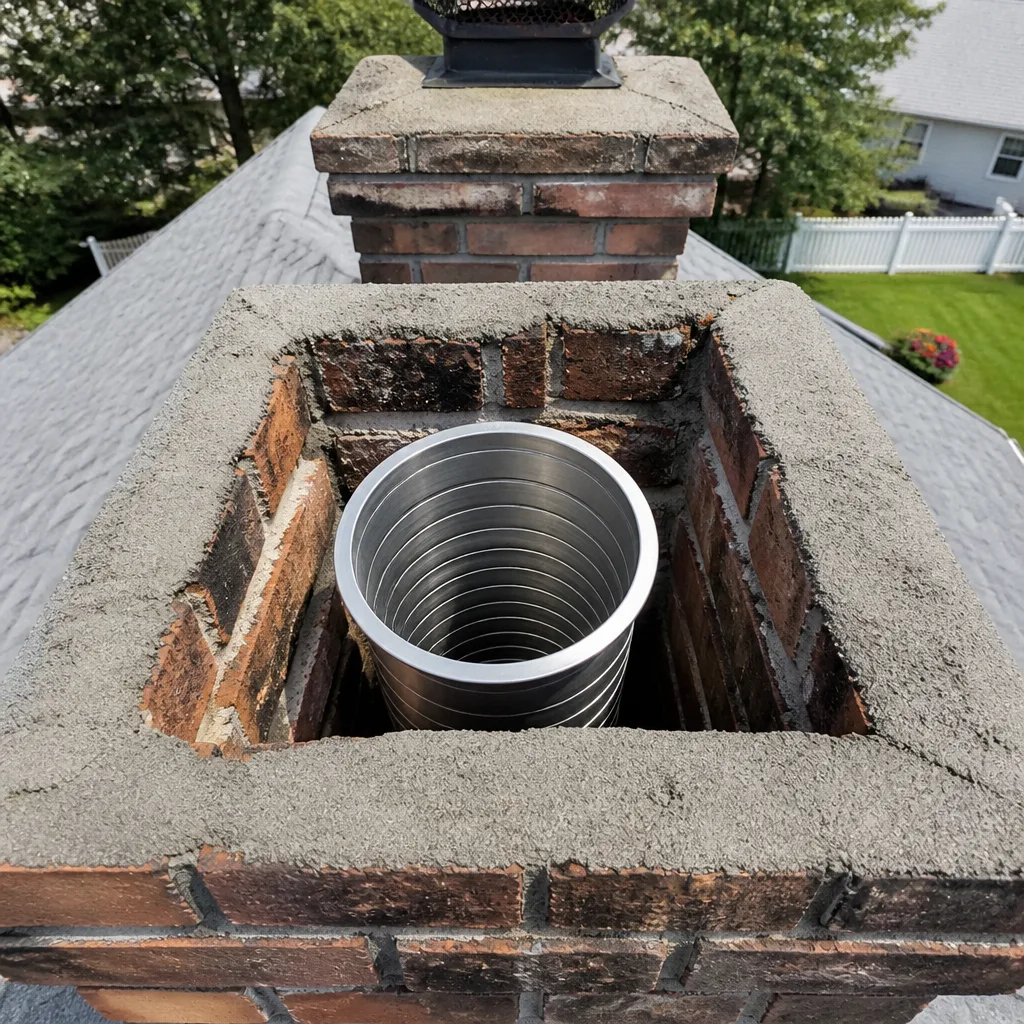 Flue relining
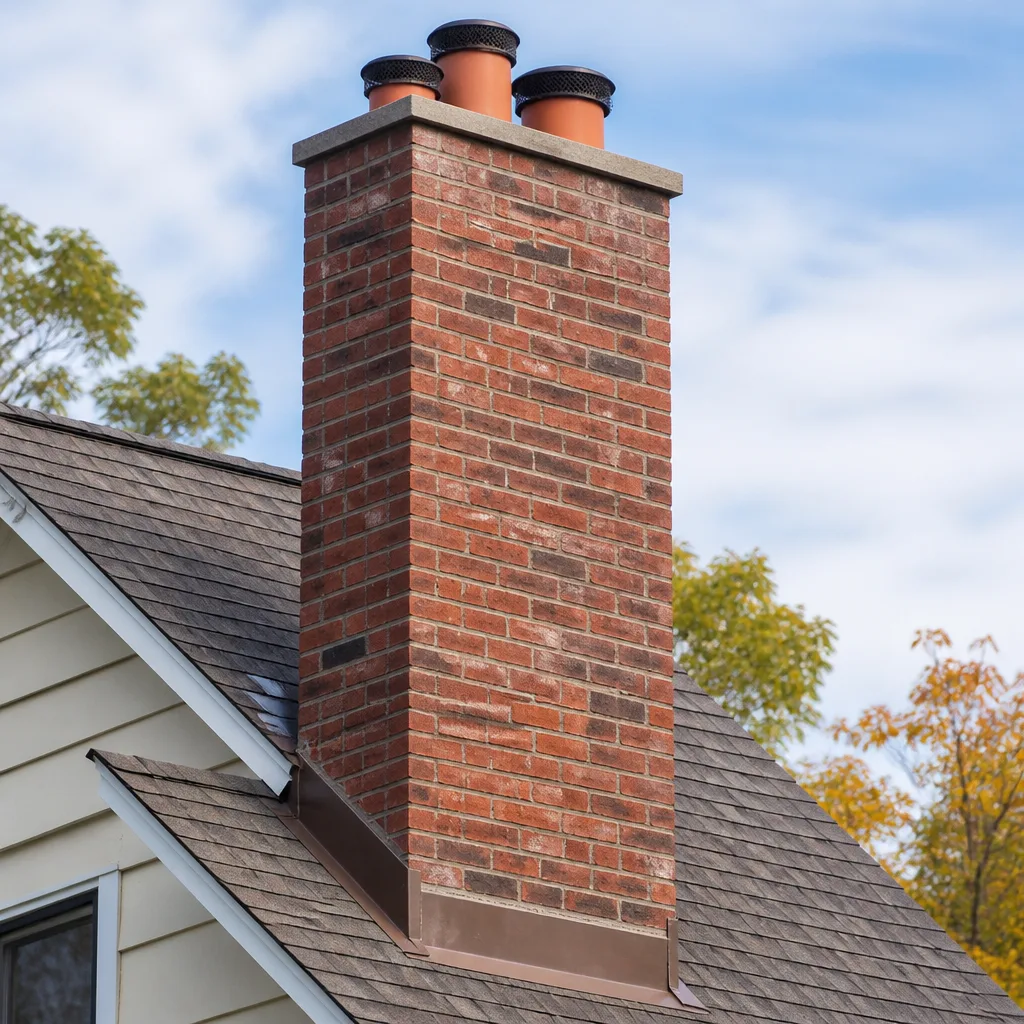 Masonry repair
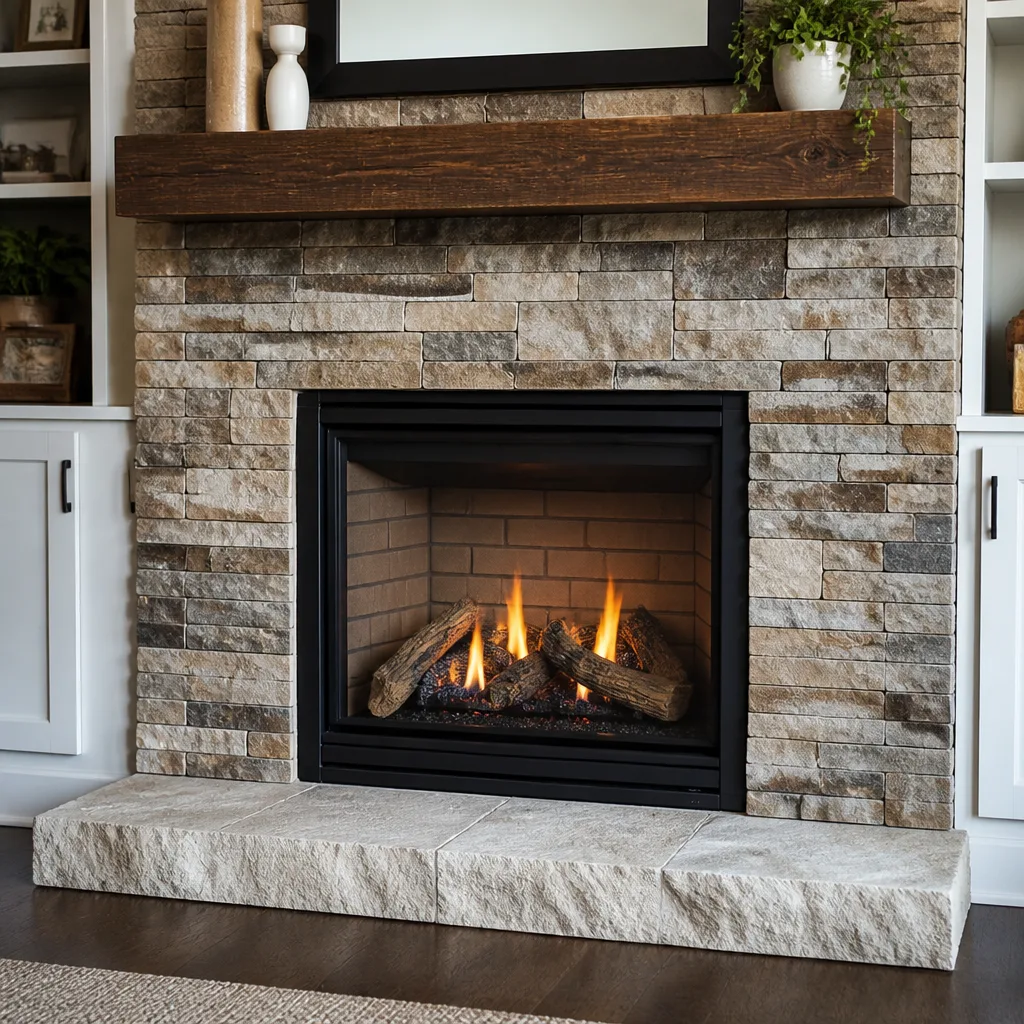 Gas fireplace service
Level 1 sweep and inspection to the NFPA 211 annual standard - flue, crown, cap, and flashing checked and photographed
Chimney sweep logs do not sweep chimneys. They loosen some creosote - which then falls where a brush and vacuum still have to collect it.
Chimney Cleaning Cost Breakdown: The Lake Forest Homeowner’s Reference for 2026
Two quotes land in your inbox on the same afternoon. One says $99. The other says $249. Both are for a chimney cleaning in Lake Forest. It’s tempting to assume the low one is the honest one and the high one is padding the bill. That assumption costs homeowners real money every fire season. A sweep-only company quotes you the visit. A full-service specialist quotes you against a complete scope, including the inspection that tells you what’s actually inside the flue. Those two numbers aren’t competing – they’re answering different questions. This reference separates every line item in a Lake Forest chimney cleaning bill so you can read any quote on its own terms, spot what’s missing, and know which add-ons are earned and which are invented.
Quick Answer
A standard chimney sweep in Lake Forest typically runs $150 to $300, and that range usually includes a Level 1 visual inspection. Add a liner camera inspection and you’re looking at $200 to $450. Repair work found during the sweep – a cracked crown, a failed cap, a damaged smoke chamber – pushes the total higher and should always be quoted separately in writing before anyone touches the chimney. The written estimate sets the final price, and you should never be charged for a scope of work you didn’t approve in advance.
Styles & brands we work with
- Sweep & inspection
- Caps & crowns
- Flue relining
- Masonry repair
- Gas fireplace service
Table of Contents
- What Actually Drives the Price of a Chimney Cleaning in Lake Forest
- What a Standard Sweep Includes and What Triggers Add-Ons
- Why Orange County Labor and Material Costs Shape Your Quote
- Bundled vs. Separated Inspection: Which Quote Structure Protects You
- The Cost Difference Between Catching a Cracked Crown Early and Late
- Liner Relining Costs for the Flue Sizes Common in Lake Forest
- How to Read a Chimney Quote Line by Line
What Actually Drives the Price of a Chimney Cleaning in Lake Forest
The price of a chimney cleaning in Lake Forest is set by four variables: how much creosote is in the flue, how hard it is to access, whether the inspection goes beyond a visual check, and what the technician finds once they’re up there. Two homes on the same street can quote differently for reasons that have nothing to do with the company and everything to do with the chimney itself. A wood-burning fireplace that’s seen a full season of heavy use needs more than a gas fireplace that’s coasted on low flame.
Creosote is the biggest single factor. There are three degrees of it, and each one costs more to remove than the last:
- Stage 1 creosote is a light, flaky soot that brushes out easily. Most annual sweeps fall here.
- Stage 2 creosote is a hardened, glazed crust that takes rotary brushing and more time. This moves the price up a notch.
- Stage 3 creosote is a dense, tar-like buildup that has concentrated in the flue and is the kind most closely associated with chimney fire risk. It’s hard to remove, and it’s the point at which a technician should be talking to you seriously about what’s in the flue, not just sweeping it.
Access is the second variable. A fireplace with a clear, open hearth and a straight flue is a straightforward job. A fireplace with a tight damper, an offset flue, or a glass-front insert takes longer and costs more. Homes in Lake Forest’s older pockets, near the Foothill Ranch and Portola Hills edges, sometimes have flue configurations that are less forgiving than newer construction. That shows up in the quote.
The third variable is inspection depth, and we’ll get to that in detail below. The fourth is repair scope. A sweep is a maintenance visit; it’s not a repair appointment. Any quote that’s trying to be both at once deserves a closer look at how it’s structured.
What a Standard Sweep Includes and What Triggers Add-Ons
A standard sweep is a cleaning plus a Level 1 visual inspection, and it should cover the firebox, the damper, the smoke chamber, and the flue up to the top. That’s the baseline. Everything else is either an upgrade or a finding. The confusion in the market comes from companies that treat the inspection as an add-on when it should be part of the visit – and companies that treat a cleaning as optional when it should depend on what the inspection reveals.
Here’s a typical structure for each line item:
- Standard sweep with Level 1 visual inspection: $150 to $300. Covers cleaning and a visual check of accessible components.
- Liner camera inspection: $100 to $200 added. A cable-mounted camera is run down the flue to see the interior, which a visual inspection can’t do.
- Smoke chamber resurfacing: $400 to $900. The smoke chamber is the sloped zone above the damper; it’s a known hot spot for creosote buildup and it’s rarely cleaned well by a basic sweep.
- Chimney cap replacement: $200 to $500. A missing or damaged cap is the single most common cause of water intrusion.
- Crown repair or rebuild: $300 to $1,200. Cracks in the concrete crown let water in behind the flue; this is repair work, not cleaning.
What triggers an add-on is what the technician can actually see or document. Our rule is inspection first – so repairs are only done when they’re actually needed. That means finding the crack, showing you the photo, and letting the written estimate stand on its own before anything else happens.
For a deeper walkthrough of what a full cleaning visit involves, see our chimney sweep page, which lays out the sweep in order from the firebox up. If the technician finds a problem in the firebox itself during the sweep, that’s a different scope of work; our fireplace repair service handles it as its own appointment.
Why Orange County Labor and Material Costs Shape Your Quote
National averages for chimney cleaning can be misleading in Lake Forest because two cost inputs here are higher than they are in most of the country. Orange County labor rates run above the national mean, and the specialized materials a full-service chimney company uses – liner systems, crown mix, caps – don’t move through the same supply chain as generic building products. A Crown or cap that ships cheaply in other markets isn’t necessarily the same product that gets installed on a Lake Forest roof.
What this means in practice:
- A sweep in Lake Forest sits toward the upper end of the national range but is still fundamentally a labor-defined job. The technician’s time is the bulk of the cost.
- Liner replacements cost more here than in lower-labor markets, not because the material costs more but because installation labor dominates the job.
- Crown work and cap work are quote-by-quote on this market because the material choice – and whether the crown is a repair or a rebuild – swings the price.
- Companies that carry their own professional-grade stock (a full-service specialist) tend to have more room to scope a repair accurately than a sweep-only operation that has to order parts.
The mild winters around Lake Forest also matter, though not in the way most homeowners assume. We don’t have the freeze-thaw pounding that drives a lot of masonry repair in colder climates. What we do have is a long burning season followed by a dry summer and a rainy winter, and that pattern has a specific cost consequence: crowns and caps that fail are exposed to months of wet weather before the next burning season brings anyone back up on the roof to notice. A cracked crown doesn’t announce itself in July. It becomes obvious the following fall, when the damage has had a full rainy season to spread.
For context on how a Lake Forest chimney company structures its work, see Lake Forest Chimney Sweep Pros, where the full service lineup is laid out.
Bundled vs. Separated Inspection: Which Quote Structure Protects You
There are two ways to structure a chimney visit, and the difference in the quote isn’t cosmetic – it’s the difference between getting a full picture of your chimney and getting a cleaning. A bundled quote prices the sweep and inspection as a single line item. A separated quote prices them independently. Both can be fair. The question is which structure protects you when something is found.
A bundled quote is the cleaner option when the inspection is genuinely included and not just a glance up the flue. The risk in a bundled quote is that the inspection gets minimized – enough to say “all clear” and move on, not enough to actually find the problem. A company that quotes a low bundled price and then suddenly discovers a $2,000 liner failure the moment the technician is on the roof is showing you the failure mode of a bad bundle.
A separated quote is the more transparent option on paper, but it requires the homeowner to understand what they’re buying. If the sweep is quoted at $99 and the inspection is quoted separately at $125, that’s $224 for a sweep plus a Level 1 inspection – which is the same value as a bundled quote at $225, just presented in two lines. The structure isn’t the problem; the transparency is.
Here’s how to evaluate either structure:
- Ask what the inspection level is. Level 1 is a visual check of accessible components. Level 2 adds a camera down the flue. Level 3 is a diagnostic for a known problem. A sweep should include Level 1; if it doesn’t, you’re not getting an inspection.
- Ask whether a camera inspection is included or add-on. If it’s add-on, ask the price upfront. It’s the single most useful diagnostic you can buy for a wood-burning flue.
- Ask whether findings are quoted in writing before any work proceeds. If the answer is “we’ll give you a number up there,” that’s not a quote.
- Ask whether the repair quote is broken into line items. A single lump-sum number for a cracked crown and a liner replacement with no breakdown is a quote you can’t evaluate.
- Ask what happens if the sweep finds nothing. A full-service specialist should tell you plainly when the chimney is in good shape and the sweep is enough. That answer is the test of whether the inspection was real.
In our experience the quote structure matters less than the answer to question five. A company that will tell you “nothing needs repair today” has earned the right to be trusted when it says something does.
The Cost Difference Between Catching a Cracked Crown Early and Late
The crown is the concrete cap at the top of the chimney that sheds water away from the flue. It’s also the piece most likely to crack – and because it sits on the roof, it’s the piece most likely to go unexamined until a problem has spread. A cracked crown caught during a routine sweep is a repair. A cracked crown that’s allowed water intrusion for a full rainy season is a masonry problem. The gap between those two outcomes is the single biggest pricing variable in chimney repair.
Here’s how the cost timeline works in general terms:
- Cracked crown caught at sweep time: repair-scope pricing, typically $300 to $700, depending on crack size and whether the crown needs patches or a full resurface. The flue is intact because water hasn’t been getting in.
- Cracked crown after one rainy season: the crack has widened, water has worked into the masonry below, and the repair often extends beyond the crown itself. $700 to $1,200 or more once adjacent masonry is involved.
- Cracked crown after multiple seasons: the flue tile may be compromised, and the scope may have shifted from crown repair to crown rebuild plus liner work. That’s a fundamentally different project.
Lake Forest’s annual cycle makes this timeline more relevant than it would be in a colder climate. We have a long, dry summer when no one is on the roof, followed by a wet winter when cracks have months to admit water, followed by a fall when people call for a sweep. That first fall call is the moment to catch the crown. If the sweep happens and the crown doesn’t get looked at – because the company quoting the sweep doesn’t do crown work – the damage gets a free pass for another year.
That’s the practical argument for a full-service specialist over a sweep-only company. Not that the sweep-only company is dishonest, but that their scope has a boundary, and the crown sits outside it. A company that sweeps and inspects and repairs and caps the chimney can catch the crack in the same visit that finds it. See our chimney repair page for how repair scopes are structured, and our chimney cap and crown service for the protective half of the equation.
Protecting what you’ve already paid to repair is the framing we use with Lake Forest homeowners: a crown repair without a proper cap is a job that hasn’t been finished. The cap is the piece that keeps water out of the flue; the crown is the piece that keeps water out of the masonry. Both need to be in good shape for either to do its job.
Liner Relining Costs for the Flue Sizes Common in Lake Forest
Relining is the biggest line item a Lake Forest homeowner will see on a chimney quote, and it’s also the one with the widest spread – because a liner replacement can be scoped several different ways depending on the flue, the damage, and the line of approach. Flue sizes in Lake Forest tract homes typically fall into a handful of standard dimensions, which makes the pricing more predictable than it first looks.
For a standard flue with moderate damage, a full liner replacement typically lands between $2,500 and $5,000. For a flue in poor condition or with significant offsets, that can climb past $6,000. Those ranges are broad on purpose, because the variables below are what move the number, and a company that quotes you a flat liner replacement without asking about any of them is quoting a guess.
What moves the price up:
- Flue size and length. A tall flue with a large cross-section uses more liner material and more installation time.
- Existing damage to the flue tile. A flue with cracks and spalling can require preparation before a new liner goes in.
- Offsets and bends. A straight flue is a straightforward install. An offset flue costs more in labor and material.
- Whether the appliance is wood-burning or gas. Different liners suit different appliances, and the material selection affects cost.
What can bring the price down is HeatShield liner restoration. It’s a resin-based system that restores a damaged flue from the inside, and it’s a cost-effective alternative to full liner replacement that most sweep companies don’t carry or know how to apply. We’re certified to apply it, and we work with DuraFlex flexible liner systems for flues that need a full re-line. Those two approaches cover most of the cases we see in Lake Forest, and the choice between them comes down to the condition of the flue.
How to ask for liner pricing upfront:
- Ask for a camera documentation of the damage. Not a description – photos or video. If a company can’t show you the crack, question the recommendation.
- Ask for both options priced. Full liner replacement and liner restoration should both appear on the quote if restoration is a viable option.
- Ask which brand and system is being specified. A liner replacement specified as DuraFlex is a different product from a generic liner, and the specification should be on the quote.
- Ask what happens if the flue is in good shape. The right answer is “then we don’t re-line it.”
- Ask for the repair quote in writing, with the liner scope as its own line item. A liner cost buried inside a larger lump sum is a quote that’s been built to deflect scrutiny.
We work with a curated roster of professional-grade brands – DuraFlex for flexible liner systems, HeatShield for restoration, and others – because trade-level materials are what drive the longevity of the job. If the liner has to be replaced, the material choice is the difference between a job that lasts and a job that gets redone.
How to Read a Chimney Quote Line by Line
A chimney quote is readable if you know what sections to look for. Most quotes from full-service specialists break into five parts: the sweep, the inspection, the findings, the repair scope, and the protection work. If any of those sections is missing from a quote, that’s worth asking about before you sign anything.
Here’s the structure to look for:
- Scope section. What’s being done – sweep, inspection level, camera or no camera. This tells you what the visit covers.
- Line-item pricing. Each service with its own price. A single lump sum for “chimney service” is a quote you can’t evaluate.
- Findings section. What was found, with photos where relevant. If the quote is a repair quote, this is the section that justifies it.
- Optional vs. required. Repairs that are safety-critical should be marked; repairs that improve longevity but can safely wait should be marked too. A company that lumps everything into “required” is telling you something about how it sells.
- Protection section. Cap and crown, if the sweep found anything that affects water intrusion. If the sweep found something and the quote doesn’t mention protection, the repair is half-scoped.
The question that separates a good quote from a bad one is simple: can you see the photo, read the finding, and understand why the repair is on the list? If yes, the quote is doing its job. If not, the quote is asking for trust it hasn’t earned. A written estimate should set the final price, and it should set it before the work begins, not after.
Following local code matters on repair work, particularly around liner installations and smoke chamber resurfacing. Most cities require a permit for structural chimney work, so ask your city’s building department what applies to your job – and ask the company whether they pull permits when they should. A quote that skips permit work is a quote that leaves you holding the compliance risk.
Common Mistakes to Avoid
- Comparing a bundled quote to a separated quote without reading the scope. Two numbers answering different questions can’t be compared on price alone. Read what each one covers before you compare.
- Assuming a low sweep price means a low overall cost. A $99 sweep that excludes inspection can end with a $2,000 repair conversation the homeowner had no warning about. Ask what’s included before you book.
- Skipping the camera inspection on a wood-burning flue. A visual check from the firebox can’t see the full length of the flue. The camera is the only way to see the interior, and it’s the difference between catching a cracked tile and finding out about it in a chimney fire.
- Letting a sweep-only company close out the visit. If the sweep finds a crown issue or a cap problem, a sweep-only company’s scope ends at the cleaning. You’ll need a second company to finish the job – or you’ll go a season without doing it.
- Approving repairs without seeing photos. A homeowner in Lake Forest can’t verify a recommendation that isn’t documented. Ask for photos of the finding on the quote.
- Treating the cap and crown as afterthoughts. Repair work without a cap is a repair that gets undone by the next rain. Protect what you’ve already paid to fix.
- Booking a sweep without asking about the inspection level. A Level 1 visual inspection is the baseline; anything phrased as “a look” without a level attached is worth questioning.
See the difference
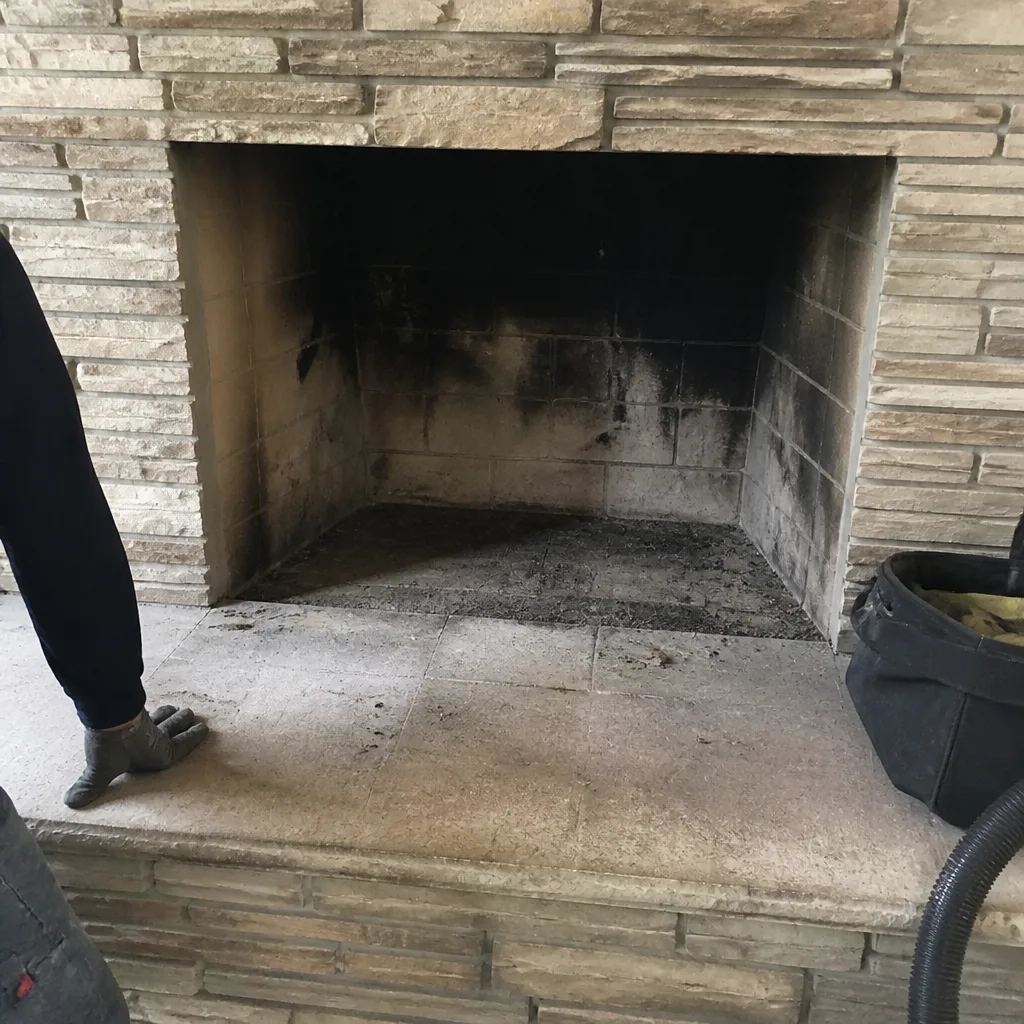 Before
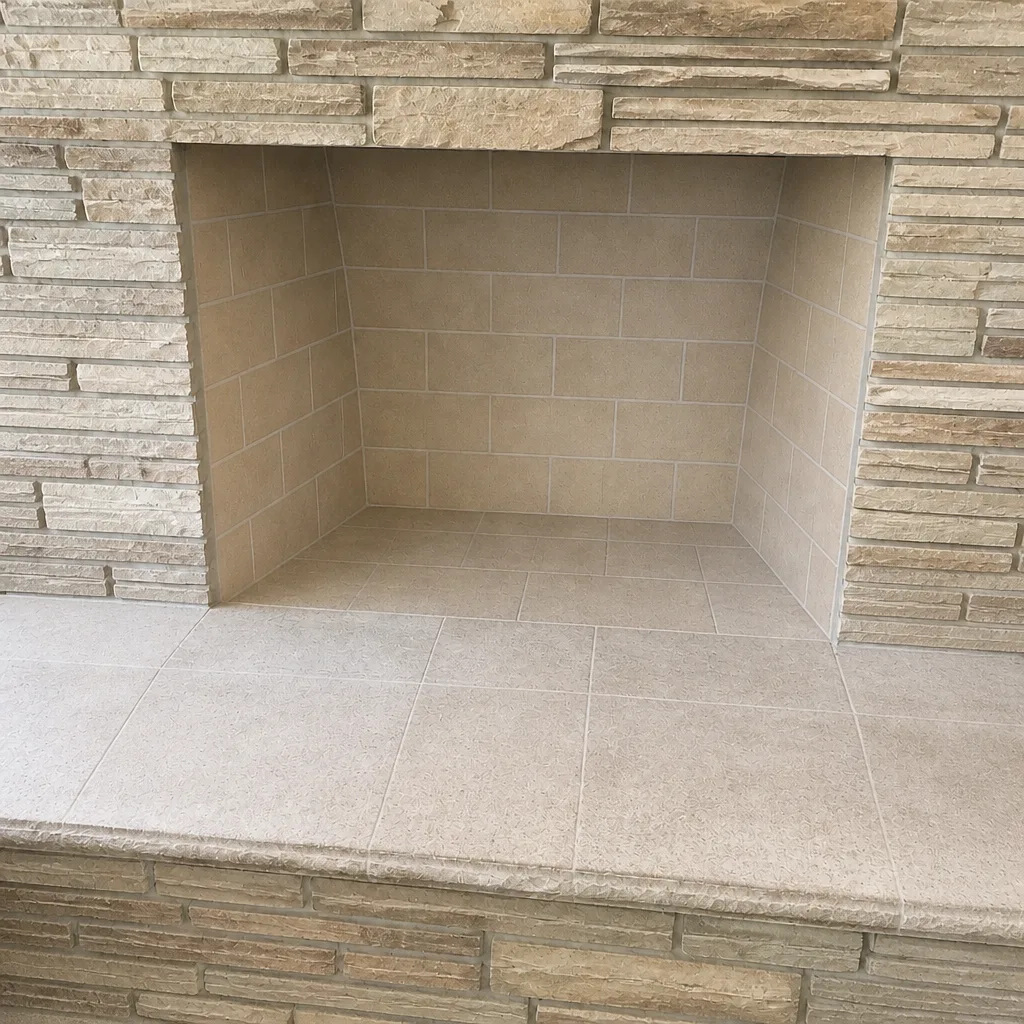 After
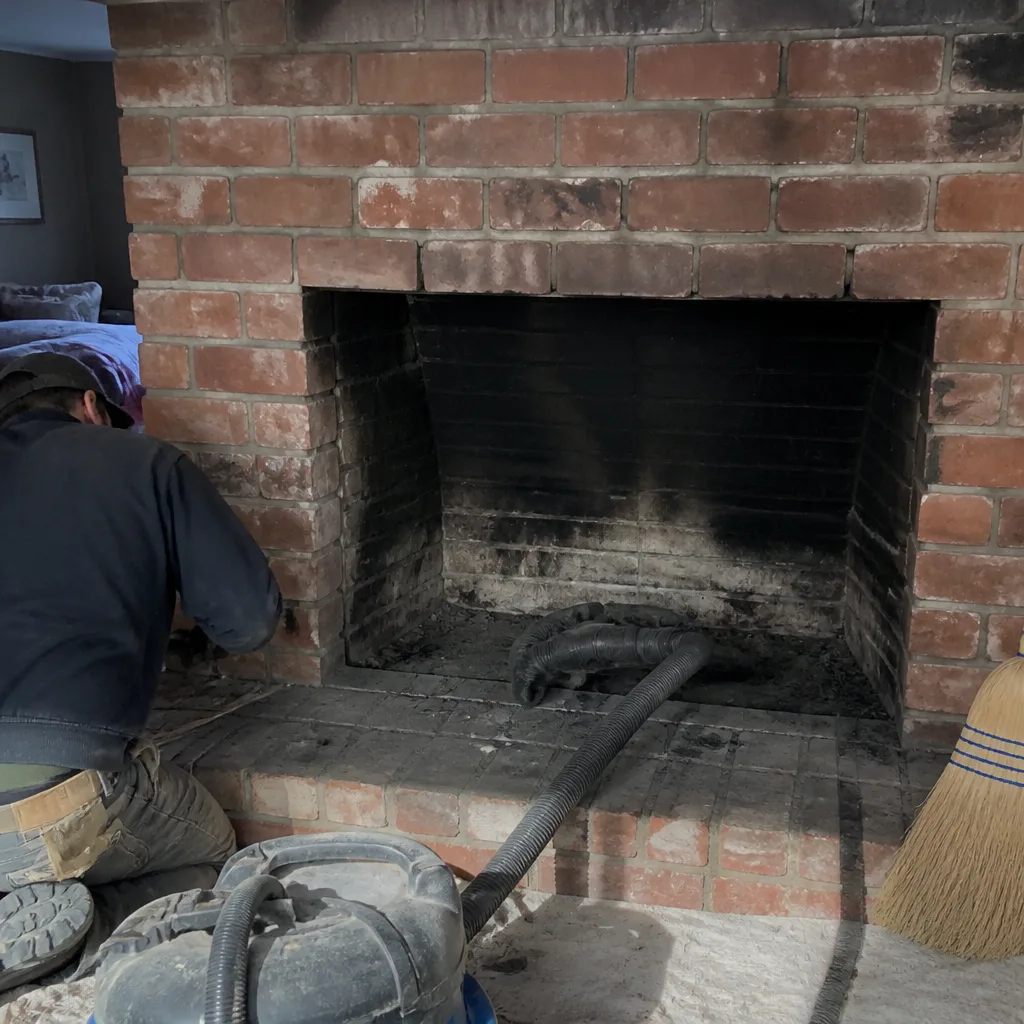 Before
 After
 Before
 After
When to Call a Professional
Call a professional when your fireplace has gone a full burning season without a sweep, when you’ve noticed a smell in the firebox during warm months (which can indicate creosote or moisture), when you’re buying or selling a Lake Forest home and need an inspection on the record, when a prior sweep found a problem that hasn’t been addressed, or when you’ve never had the flue examined with a camera. The other signal is structural: a cracked crown, a missing or damaged cap, or masonry that’s spalling. Those are repair scopes, not cleaning scopes, and they don’t fix themselves between seasons. Lake Forest Chimney Sweep Pros offers free estimates in Lake Forest – call (833) 468-5670. We answer 24/7. Fast dispatch from 7am to 7pm, Sunday through Friday.
Frequently Asked Questions
A standard chimney sweep in Lake Forest typically costs $150 to $300, including a Level 1 visual inspection. Adding a camera inspection brings the total to $200 to $450. Repair work found during the sweep is quoted separately. Call (833) 468-5670 for an exact quote – estimates are free.
Only if the flue is demonstrably damaged and the damage can be shown to you. A cracked or spalled flue tile, a gap at a joint, or a flue that has never been lined on a wood-burning appliance are all reasons a liner is worth discussing. If the camera inspection shows an intact flue, a new liner isn’t needed – and liner restoration with HeatShield may be a middle path if the damage is minor. Ask to see the photos before approving anything. Call (833) 468-5670 for a camera inspection.
A wood-burning chimney should be swept once a year, at minimum, ideally before the burning season begins. A gas fireplace is usually swept less often but still inspected annually. In our experience Lake Forest homeowners who burn frequently need the annual sweep without exception – the mild climate doesn’t reduce creosote buildup. Call (833) 468-5670 to book the sweep.
Creosote builds up over the season whether you sweep or not, and once it reaches the denser stages it’s harder and more expensive to remove – and it’s the stage most closely tied to chimney fire risk. You can also miss a cracked crown or a failing cap for an entire rainy season, which turns a $400 repair into a much larger project. Skipping isn’t free; it’s deferred. Call (833) 468-5670 before the next burning season.
Two reasons: labor rates in Orange County run above the national mean, and the specialized materials a full-service chimney company uses – HeatShield restoration systems, DuraFlex liner systems, Famco components – don’t move through the same supply chain as generic building goods. The number isn’t the same job at a different price; it’s a different scope at a different cost. Call (833) 468-5670 for a written estimate.
Sometimes, yes – bundled quotes can be a fair price for both services. But the structure matters less than whether the inspection is real: whether a camera is used where it should be, whether findings are documented with photos, and whether the company is willing to tell you the chimney needs nothing. A bundled quote from a company that will say “all clear” is a good deal; a bundled quote from a company that will always find something isn’t. Call (833) 468-5670 to talk through what your chimney needs.
The Bottom Line
The cost of a chimney cleaning in Lake Forest comes down to scope. A sweep is the baseline, costing $150 to $300 with a Level 1 inspection. A camera inspection and a repair scope are separate line items, correctly quoted as such. The variables that move the number – creosote stage, access, flue condition, repair findings – are all things the technician should be able to show you, not just describe. A written estimate sets the final price, and nothing should be recommended that isn’t backed by evidence you can see for yourself. When a quote is structured so you can read it, you can trust it. When it isn’t, ask. Call (833) 468-5670. We answer 24/7. Fast dispatch from 7am to 7pm, Sunday through Friday. Closed Saturday.
Written by the team at Lake Forest Chimney Sweep Pros.